Northeast India doesn't have one season — it has several, and they vary significantly between states. The best time to visit Meghalaya is not the same as the best time for North Sikkim. A trip to Tawang in February is a completely different experience from the same trip in October. This guide breaks it down honestly, by destination and by what you're actually trying to experience.
Quick answer
For most private Northeast India trips, October to April is the safest planning window.
The Short Answer
September to April is the long, reliable window for Northeast India, and it's more forgiving than most guides suggest. Within it, different months suit different trips. The only stretch to approach with real flexibility is peak monsoon — July and August — when the rain is heaviest. Even then, it's mainly Sikkim's mountain roads that see serious landslides and closures; Meghalaya is at its spectacular best in the rain, and Arunachal's valleys stay accessible. June (rain still building) and September (waterfalls at their peak, the greenest hills of the year) are genuinely good months — not months to avoid.
October – November: Post-Monsoon Clarity
October and November are among the best months to visit the Northeast. The monsoon has ended, landscapes are a saturated green, waterfalls are still full, and the skies clear to reveal mountain views that were obscured all summer.
This is peak season for Arunachal Pradesh — the roads to Tawang and Sela Pass are open, the air is crisp, and the Buddhist festivals (including Tawang Monastery's Torgya festival in January, which is worth planning around) are approaching. Meghalaya is excellent — Dawki's water begins to clear, Cherrapunji's waterfalls are still powerful. Sikkim's rhododendron valleys are dry and navigable; North Sikkim permits are easy to obtain.
The tradeoff: this is also when prices are highest and popular hotels book out earliest. Plan 6–8 weeks in advance.
December – February: Clear Skies, Cold Nights
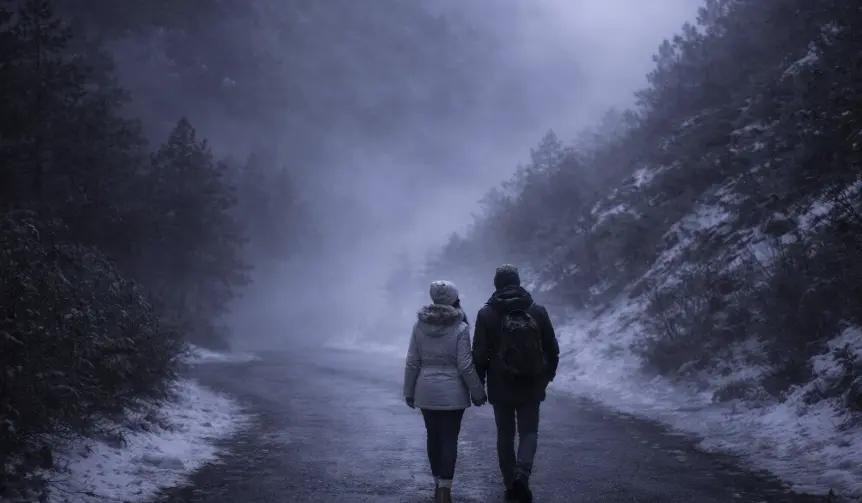
Winter in Northeast India is cold — particularly in high-altitude zones. Tawang can drop to -5°C or below at night. Gangtok sits around 4–8°C. Zero Point in North Sikkim sees heavy snowfall that can close the road entirely in January and February.
But for travellers who prepare for it, winter is extraordinary. The skies are the clearest of any season. The mountain views from Sela Pass and from Pelling (Sikkim) are at their most dramatic. Crowds thin out after the holiday rush, but Christmas and New Year dates should be booked early. The Kaziranga National Park in Assam (often included in combo tours) is at its best — rhinos, elephants, and the plains are dry enough to navigate properly.
On cold-weather trips: We include a detailed packing and preparation note with every winter itinerary. Hotel selection matters significantly in December–February — we only book properties with reliable heating for cold-season travel.
March – May: The Overlooked Season
March to May is what we call the hidden gem window — particularly for Sikkim. The rhododendron bloom in Yumthang Valley and across the hillsides is one of the most spectacular natural displays in India. The Singalila Ridge (Darjeeling side) is carpeted with colour. Temperatures are warming but still pleasant. The crowds of October–November haven't returned.
For Arunachal Pradesh, March and April are excellent — the Ziro Music Festival draws visitors to the Apatani valley in September, but Ziro in spring is equally beautiful without any festival crowds. The Mechuka Valley is accessible and at its most lush.
For Meghalaya, this period is warm and occasionally hazy, but still very manageable. The waterfalls begin to build as pre-monsoon showers start in May. May itself can be unpredictable — earlier in the month is safer than later.
The Worst Time to Visit Northeast India: Peak Monsoon (July – August)
Search around and you'll see the whole June-to-September monsoon written off as the time to avoid. That's too broad. In our experience — and we've travelled here in these months ourselves — only July and August, when the rain is heaviest and most persistent, are the weeks we'd genuinely ask most travellers to plan around. June and September are a different story.
September, in particular, is one of the most rewarding times to be here. The monsoon is pulling back, the hills are the greenest they'll be all year, and the waterfalls — Nohkalikai, the Seven Sisters, the cascades around Cherrapunji — are at their absolute peak. Skies clear between showers to reveal views that turn hazy by mid-winter. Early June works in reverse: the rain is only building, roads are open, and the landscape is already lush.
The disruption is narrower than most sites suggest, too. Serious landslides and multi-day road closures are largely a Sikkim problem — its high mountain roads, and North Sikkim especially. Meghalaya rarely faces that: the roads hold up, and the rain is the entire point — this is the state at its most spectacular. Arunachal sits in between; its valleys and towns stay accessible, and only the very highest passes on the Tawang circuit call for caution at the peak of the rains. So if you're travelling in July or August, go in with flexibility and lean toward Meghalaya — but don't write the monsoon off wholesale.
One caveat in the other direction — the cool-season stretch has a small catch of its own. If your trip depends on the very highest passes (Sela Pass en route to Tawang, or Zero Point and Gurudongmar in North Sikkim), deep winter in January–February can close them to snow for days. That doesn't make winter a bad time to visit; it just means timing those specific spots needs a little care.
By Destination — Quick Reference
| Destination | Best Months | Avoid |
|---|---|---|
| Meghalaya | Sep – May | Jul – Aug |
| Arunachal Pradesh | Sep – Apr | Jul – Aug |
| Sikkim & Darjeeling | Oct – May | Jun – Sep |
| Northeast Combo | Oct – Apr | Jun – Sep |
A note on the monsoon: September is excellent for Meghalaya and Arunachal — waterfalls peak and the hills are at their greenest — so those trips can happily start then. It's mainly Sikkim's high mountain roads that stay landslide-prone until the rain clears, and Kaziranga (Assam) that stays closed through October — which is why Sikkim and wildlife combos lean October onward.
Not sure about your travel month?
Share your month, days and route idea. We will suggest the most practical Northeast itinerary for that season.
Northeast India Month-by-Month Travel Guide
If you are comparing months, use this as the working guide. The right answer changes depending on whether your route is Meghalaya-only, Tawang-heavy, Sikkim-heavy or a multi-state circuit.
| Month | Best For | Planning Note |
|---|---|---|
| January | Tawang, Kaziranga, Meghalaya, clear views | Cold in high-altitude areas; choose hotels carefully. |
| February | Quiet winter trips, clear skies, Kaziranga | Snow can affect Sela Pass and North Sikkim roads. |
| March | Sikkim flowers, Arunachal valleys, mixed routes | One of the most balanced months for private tours. |
| April | Sikkim, Darjeeling, Arunachal, Meghalaya | Warm in Meghalaya, pleasant in hills and valleys. |
| May | Sikkim and Darjeeling, early Meghalaya showers | Later May can become unpredictable as rain builds. |
| June | Green Meghalaya, flexible travellers | Rain begins; avoid Sikkim-heavy high-road plans. |
| July | Only rain-loving Meghalaya travellers | Peak monsoon; keep buffer days and avoid Sikkim roads. |
| August | Dramatic Meghalaya waterfalls | Wettest stretch; not ideal for first-time multi-state tours. |
| September | Meghalaya waterfalls, green hills, Arunachal | Excellent for Meghalaya; keep Sikkim for October onward. |
| October | Almost every Northeast route | Peak demand starts; book quality stays early. |
| November | Meghalaya, Tawang, Sikkim, Kaziranga | A strong month for multi-state private trips. |
| December | Clear views, Kaziranga, winter mountain trips | Rewarding but cold; route pace and hotel heating matter. |
Best Time for Popular Multi-State Combinations
Most of our trips combine two or three states, and the ideal month shifts slightly depending on which you pair. Here's how the most-requested combinations line up.
Best time to visit Meghalaya and Arunachal Pradesh
September to April is a long, forgiving window for this pair. September–October gives you Meghalaya's waterfalls at their peak alongside clear, open roads to Tawang and Sela Pass in Arunachal Pradesh. March–April pairs Arunachal's spring — rhododendrons and lush valleys like Mechuka — with warm, manageable weather in Meghalaya. Only peak monsoon (July–August) calls for real flexibility, and even then Meghalaya is glorious.
Best time to visit Sikkim and Meghalaya
October to May, with October–November and March–April the strongest windows. Both states are dry and clear then, and from March, Sikkim adds its rhododendron bloom in Yumthang and along the Singalila Ridge. Because Sikkim's mountain roads stay landslide-prone through the monsoon, keep this pairing to October onward — though Meghalaya on its own is spectacular from September.
Best time to visit Assam, Meghalaya and Arunachal Pradesh
A classic circuit built around Kaziranga. Because the park is closed May–October, this combination only works from November to April — November to February is ideal, when Kaziranga is dry for safaris and the mountain weather is at its clearest.
For a full multi-state trip, our Northeast Combo itineraries are built around exactly these windows. If yours includes Arunachal or the restricted areas of Sikkim, factor in permit timelines too — our Inner Line Permit guide walks through how long each one takes.
Festivals Worth Planning Around
- Torgya Festival, Tawang (January): Three-day masked dance festival at Tawang Monastery — one of the most atmospheric events in the Northeast
- Losar, Sikkim (February/March): Tibetan New Year, celebrated across monasteries in Gangtok and beyond
- Nongkrem Dance Festival, Meghalaya (November): Khasi harvest festival near Shillong
- Hornbill Festival, Nagaland (December): If extending into Nagaland, this is the highlight of the year
We can time your itinerary around any of these if they interest you — just mention it when you reach out.
Our Honest Advice
The question we're asked most often is: "When is the best time?" Our honest answer is almost always: whenever you can go, across the long September-to-April window. Don't delay a Northeast trip waiting for a theoretically perfect month. September is a quiet favourite — peak waterfalls and the greenest hills of the year. October and March are superb. December is cold but rewarding. November and April are underrated.
What matters more than the month is travelling with enough days and the right pace. A rushed 4-day trip in October will be worse than a well-planned 8-day trip in January.
Common Questions
Which month is best to visit Northeast India?
October to April is the safest overall window for a Northeast India trip. October and November suit most routes, December to February are cold but clear, and March to April are excellent for Sikkim, Arunachal Pradesh and mixed private tours.
Is October a good time to visit Northeast India?
Yes — October is one of the best months to visit Northeast India. The monsoon has cleared, the landscape is a saturated green, waterfalls are still full, and the skies open up for mountain views. Weather is mild and dry across Meghalaya, Arunachal Pradesh and Sikkim. It is peak season, so book hotels six to eight weeks ahead.
Is December a good time to visit Northeast India?
Yes, if you are prepared for cold. December brings the clearest skies of the year and thin crowds. High-altitude spots like Tawang and North Sikkim can drop below freezing at night, and the highest passes may see snow — but for most Meghalaya, Gangtok and lower-Arunachal itineraries it is a rewarding, uncrowded month.
Is September a good time to visit Northeast India?
September is one of the best months of the year to be here. As the monsoon eases, the hills are at their greenest and the waterfalls — Nohkalikai and the cascades around Cherrapunji especially — are at their absolute peak. Meghalaya is spectacular. Skies clear between showers for views that turn hazy later in winter. The one thing to watch is Sikkim, where high mountain roads can still see landslides until the rain fully clears; for a Sikkim-heavy trip, October is safer.
Can you visit Northeast India in August?
You can. August is the wettest month, so go in with flexibility — but it is far from a write-off. Meghalaya is at its most dramatic, with Cherrapunji's waterfalls in full force and the landscape impossibly green. Arunachal's valleys and towns stay accessible, though the highest Tawang-circuit passes need caution at the peak of the rains. The real disruption is largely in Sikkim, where mountain roads are prone to landslides — that is the one region we would hold off on in August.
What is the worst time to visit Northeast India?
If there is a stretch to approach with care, it is peak monsoon — July and August — when the rain is heaviest. Even then it is not a write-off: Meghalaya is at its spectacular best in the rain, and June and September are genuinely good months (September is one of the finest of the year). The real disruption is mostly limited to Sikkim, whose high mountain roads are prone to landslides and multi-day closures in the monsoon; Meghalaya and Arunachal's main routes hold up far better. Separately, Kaziranga in Assam is closed to visitors from May to October.
When is the best time to visit Meghalaya and Arunachal Pradesh together?
September to April is a long, forgiving window for this pair. September and October give you Meghalaya's waterfalls at their peak alongside clear roads to Tawang and Sela Pass; March and April pair Arunachal's spring — rhododendrons and valleys like Mechuka — with warm, manageable weather in Meghalaya. Only peak monsoon (July–August) calls for real flexibility, and even then Meghalaya is glorious.
When is the best time to visit Sikkim and Meghalaya?
October to May, with October–November and March–April the strongest windows. Both are dry and clear then, and from March, Sikkim adds its rhododendron bloom. Because Sikkim's mountain roads stay landslide-prone through the monsoon, this pairing is best kept to October onward — though Meghalaya on its own is spectacular from September.
When does the monsoon start in Northeast India?
The southwest monsoon usually arrives in early June and runs through September, with the heaviest rain in July and August. Cherrapunji in Meghalaya records some of the world's highest rainfall in these months. June and September sit at the gentler edges of the season and are often very rewarding to travel in.
Plan by season
Receive your personalised Northeast season plan
Share your travel month, route idea and group details. We will suggest the best-fit private route, number of days and season precautions.