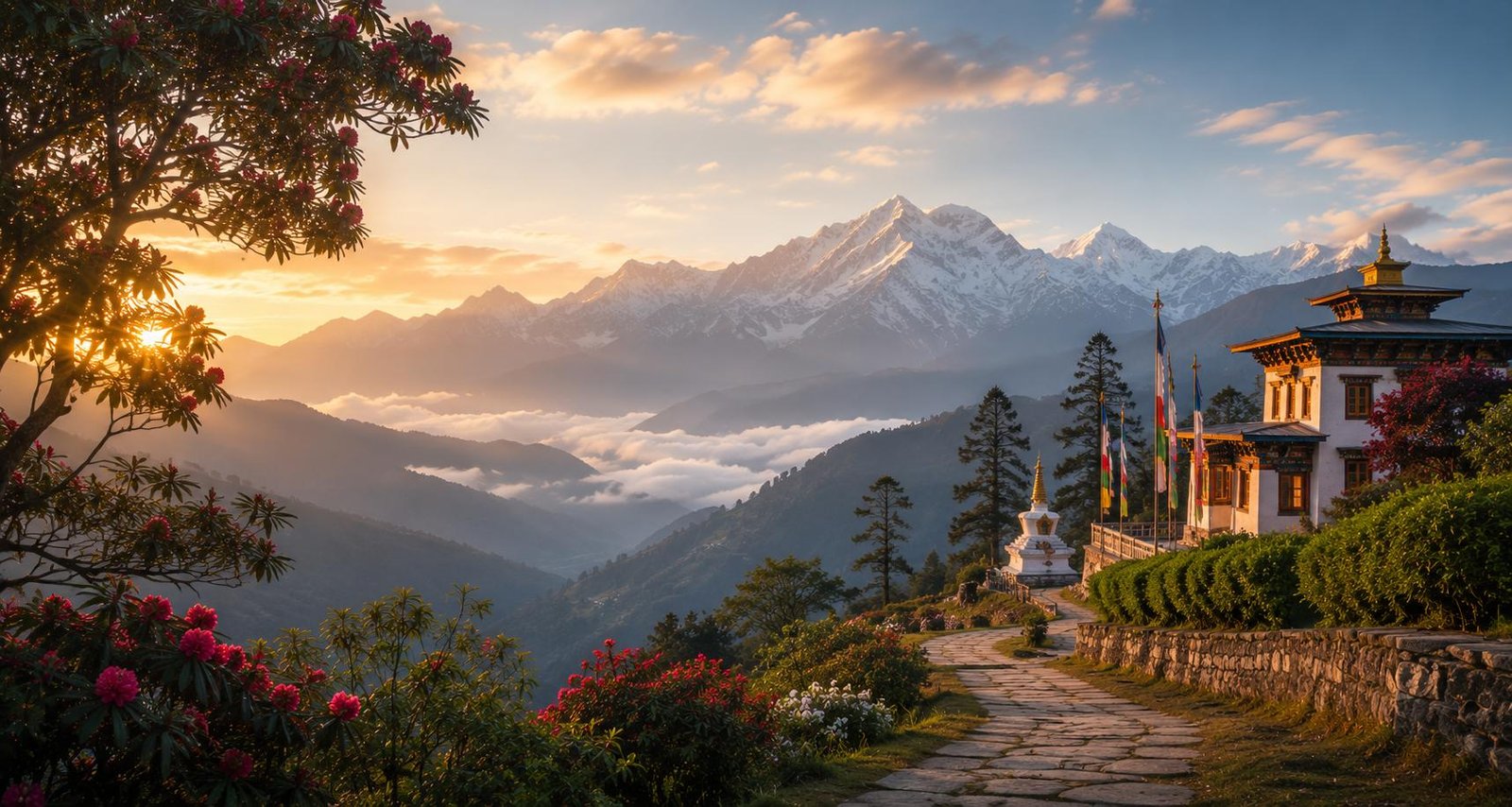
Sikkim is one of the most balanced Himalayan trips in Northeast India. It has mountain views, monasteries, high-altitude lakes, village stays, good hotels, and easier flight access than many remote Himalayan circuits. For first-time travellers, it can feel adventurous without becoming logistically overwhelming.
The trick is choosing the right route. Gangtok, Pelling, North Sikkim, Ravangla, Namchi, and Darjeeling all sound close on a map, but mountain roads and permits decide what is realistic. This guide explains how to plan Sikkim properly.
Quick answer: For a first Sikkim trip, plan 6-8 days. A balanced route is Gangtok, Tsomgo Lake, Pelling, and either North Sikkim or Ravangla/Namchi depending on season, permits, and traveller comfort.
Why Sikkim Works Well for First-Time Travellers
Sikkim has a rare mix: Himalayan drama, Buddhist culture, cleaner towns, comfortable hotels, and multiple route options. It works for couples, families, senior travellers, and small groups if the pace is planned well.
Compared with Arunachal, Sikkim is easier to access and usually has more hotel variety. Compared with Meghalaya, it is more alpine and colder, with bigger mountain landscapes and higher-altitude excursions.
The Main Sikkim Regions
| Region | Best For |
|---|---|
| Gangtok | Monasteries, cafes, MG Marg, Tsomgo Lake access, first-night base |
| East Sikkim | Tsomgo Lake, Nathula Pass when open, Baba Mandir, high-altitude day trips |
| North Sikkim | Lachung, Yumthang Valley, Zero Point, dramatic alpine landscapes |
| West Sikkim | Pelling, Kanchenjunga views, monasteries, slower scenic stays |
| South Sikkim | Ravangla, Namchi, Buddha Park, easier drives and gentler weather |
How Many Days Do You Need?
Five days can cover Gangtok and Pelling, but six to eight days gives the trip breathing room. If you want North Sikkim, do not compress the itinerary too much; the drive to Lachung and onward excursions need buffer time.
- 5 days: Gangtok, Tsomgo Lake, Pelling or Ravangla
- 6-7 days: Gangtok, Tsomgo, Pelling, Ravangla/Namchi
- 7-8 days: Gangtok, North Sikkim, Pelling or Darjeeling extension
- 9-10 days: A fuller Sikkim and Darjeeling trip with a calmer pace
Gangtok: The Natural Starting Point
Gangtok is where most Sikkim trips begin. It gives you comfortable hotels, access to permits, good food, and easy day trips. MG Marg is pleasant in the evening, while Rumtek Monastery, Enchey Monastery, Hanuman Tok, and Tashi View Point can be fitted around your arrival schedule.
Do not overload your first day. If you are flying into Bagdogra or reaching via New Jalpaiguri, the road transfer itself takes time and energy.
Tsomgo Lake and Nathula Pass
Tsomgo Lake is one of the most popular excursions from Gangtok. It is high-altitude, scenic, and very weather-dependent. Nathula Pass requires a permit and is subject to operating days, road conditions, and government restrictions. It should be planned, but not treated as guaranteed.
For families with very young children, senior travellers, or anyone sensitive to altitude, we usually assess this carefully before recommending the full high-altitude circuit.
On permits: Indian citizens do not need an ILP for Sikkim, but permits are required for restricted areas such as Nathula, Tsomgo, Lachen, Lachung, Yumthang Valley, and Zero Point. These are arranged through registered local operators.
North Sikkim: Beautiful, But Not for Every Trip
North Sikkim is spectacular: Lachung, Yumthang Valley, Zero Point, snowfields, rivers, and dramatic valley roads. But it is also the most weather-sensitive part of a Sikkim itinerary. Road closures, permit restrictions, landslides, snowfall, and altitude can affect plans.
If you have enough days and are comfortable with long drives, North Sikkim can be the highlight. If you want a relaxed family trip or are travelling in unstable weather, Pelling, Ravangla, and Namchi may be a better fit.
Pelling and West Sikkim
Pelling is quieter than Gangtok and is loved for Kanchenjunga views. The Pemayangtse Monastery, Rabdentse ruins, Sky Walk, waterfalls, and village roads make it a strong second base. It suits travellers who want mountain views without the intensity of North Sikkim.
For couples and families, Pelling often adds the right amount of calm to a Sikkim trip.
Should You Add Darjeeling?
Sikkim and Darjeeling combine naturally because both connect through Bagdogra and New Jalpaiguri. Darjeeling adds tea estates, colonial-era charm, toy train nostalgia, and a different cultural mood. But it also adds driving time.
For a 6-day trip, focus on Sikkim. For 8-10 days, a Sikkim-Darjeeling combination can work beautifully.
Best Time to Visit Sikkim
| Season | Months | Conditions |
|---|---|---|
| Best | Oct - Dec | Clear mountain views, festive season, strong demand |
| Spring | Mar - May | Rhododendron bloom, good weather, excellent for Yumthang |
| Winter | Jan - Feb | Cold and beautiful; snow can block North Sikkim routes |
| Avoid | Jun - Sep | Monsoon brings landslide risk and poor mountain visibility |
Our Honest Advice
Do not plan Sikkim by adding every famous name into one route. Decide what kind of trip you want: relaxed scenic holiday, high-altitude adventure, honeymoon-style comfort, family-friendly route, or Sikkim plus Darjeeling. The best itinerary changes depending on that answer.
If this is your first Sikkim trip, Gangtok plus Pelling is the safest backbone. Add North Sikkim only when the season, permits, health profile, and available days make sense.
Ready to plan your Sikkim trip?
Tell us your travel month, number of days, and whether you want North Sikkim or a relaxed route. We will build the right plan around weather, permits, and pace.
Plan My Trip on WhatsApp